Software rarely fails at the moment we expect it to.
An API becomes unavailable.
A third-party service changes its response.
A network connection disappears.
A webhook arrives twice.
A service returns an unexpected error.
These things happen.
And when they happen, our software needs to know what to do.
A little about me
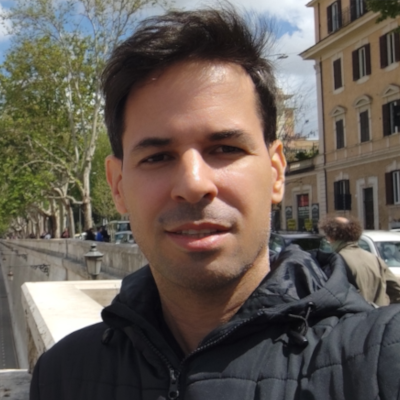
I’m Marcelo, a software developer from Brazil.
I’ve been working with web development for many years, mostly with PHP and Laravel. Today, I build business applications, integrations, reports, and systems that need to communicate with other services.
Over time, I realized something:
Building software that works when everything goes well is only part of the job.
The more interesting challenge is building software that continues to work when things go wrong.
Why resilience matters
When an application depends on external services, we don’t control everything.
We don’t control when an API will be unavailable.
We don’t control when another system will change.
We don’t control whether a request will fail because of a network problem.
We don’t control whether a webhook will arrive more than once.
But we can design our software to handle these situations.
That is what I mean by resilient software.
It doesn’t mean that software will never fail.
It means that when something fails, the system can respond appropriately.
Maybe it retries.
Maybe it delays the operation.
Maybe it uses a fallback.
Maybe it processes something asynchronously.
Maybe it records the failure and allows the operation to be recovered later.
The important thing is that failure is not treated as an impossible event.
Failure is part of the design.
What I want to explore
This blog is where I want to share what I’m learning about building resilient systems, especially with PHP and Laravel.
I’ll write about things like:
- Resilient APIs
- Fault-tolerant applications
- Third-party integrations
- Webhooks
- Asynchronous processing
- Retries and timeouts
- Handling external service failures
- Data consistency
- API changes
- Observability and debugging
- Software architecture
- Lessons learned from real-world systems
I don’t want this to be a blog about building perfect software.
Perfect software doesn’t exist.
I want to explore how we can build software that keeps working when things go wrong.
Let’s build better software
If you are a PHP or Laravel developer working with APIs, integrations, and business-critical applications, you probably know that the happy path is the easy part.
The difficult part starts when something unexpected happens.
That’s where I want to focus.
Welcome to marcelonizato.dev.
I share insights to help you build resilient systems to get amazing jobs… subscribe here: build-resilient-software-get-amazing-jobs
Let’s build software that keeps working when things go wrong.